
Haul Tray / One parcel out
How a whole haul left AllChinaBuy as one packed parcel
Once the last find was on the shelf, the haul became a delivery order. This page walks through the packing and shipping rules AllChinaBuy published in its help centre and shipping pages, as they read in August 2026. It quotes no freight prices: those varied by route and date, and the archived examples are long out of date.
One parcel from many finds, under the archived rules
AllChinaBuy's buying guide drew the first half of the journey as a chain: you submit a shopping request, the agent buys from the seller, the seller ships to the warehouse, and the goods wait there until you are ready. That warehouse was the Guangdong warehouse (Huizhou), the only one its shipping calculator offered in the August 2026 copy.
Consolidation was the step that turned separate finds into one parcel. You chose items in your warehouse space, submitted them together as a parcel delivery order, picked a shipping method, and the warehouse packed them. Its help pages made the case in two parts: better packing, and a lower international bill than sending each item alone, because each separate parcel was charged at least the first weight unit of its route and carried its own customs declaration charge.
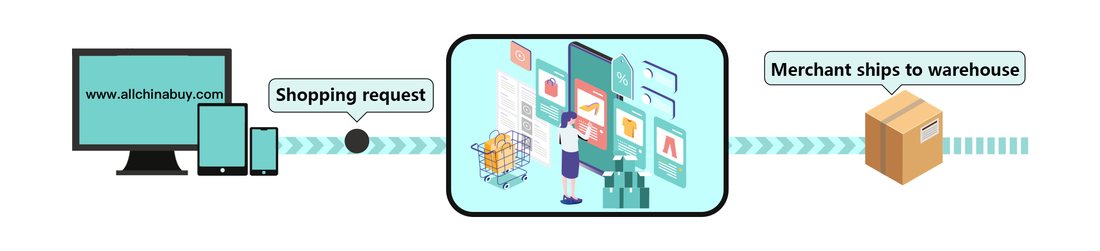
The ordering side, where a haul begins, ran on product links: you gave AllChinaBuy the link and it bought the item for you. Everything on this page happens after that, once the goods are on the shelf.
Volume weight, the reason an empty holdall costs space
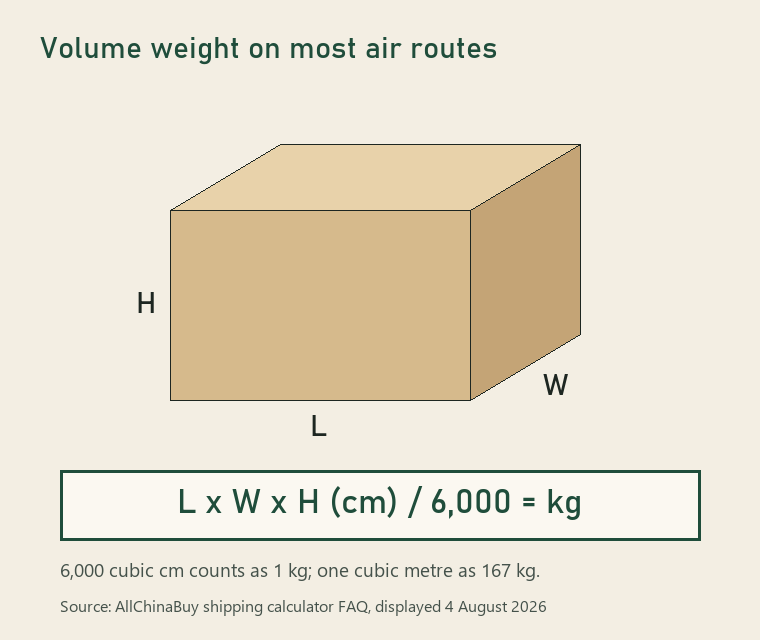
The shipping calculator's FAQ explained volume weight as a logistics term for goods that are large but light. For most air cargo it gave the formula as length times width times height, all in centimetres, divided by 6,000, with the answer in kilograms. Its own illustration: 6,000 cubic centimetres counted as one kilogram, and a full cubic metre as 167 kilograms.
Bags are exactly the large, light goods that formula was written for. A holdall stuffed with paper, a squared rucksack or a boxed set of wallets can take up more room than it weighs, and a parcel of them can end up billed on its size. Removing rigid packaging, or filling bags with the softer items in the haul, is how buyers kept that number down.
The same FAQ noted that every shipping method had its own weight limits. A parcel over the limit for a route could not be submitted on it, and the fix it suggested was to take some items out and submit again.
Bulky bags and the parcel size limits on file
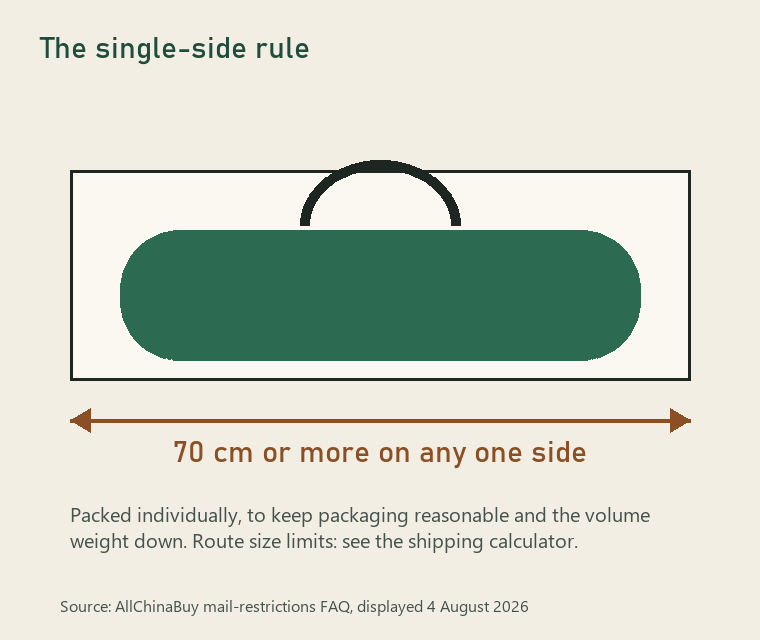
The second packing rule that touched bags was about length. The help centre's mail-restrictions FAQ said that if any single side of an item was 70 cm or more, the item had to be packed individually, to keep packaging reasonable and the volume weight down. It sent readers to the shipping calculator for the size limits of each route.
So a long holdall or a large wheeled case could end up travelling apart from the rest of a haul, as its own parcel. Shorter bags were unaffected. When a weekend bag was part of the plan, checking its longest side on the listing was worth doing before anything else went into the order.
The same FAQ explained why some items could not join a delivery order at all. Items under mail restrictions were marked with a "prohibited" icon in the warehouse, and if part of a parcel was restricted, the other items submitted with it might be restricted as well.
Paying a deposit first and settling after the weigh-in
International shipping at AllChinaBuy was paid in two steps. When you submitted the delivery order you paid a deposit based on the estimated weight and size. After the warehouse packed the parcel and the shipping company weighed and measured it, the final fee followed those figures. Per its interface text, any difference was returned to your account balance within seven days of the parcel leaving the warehouse.
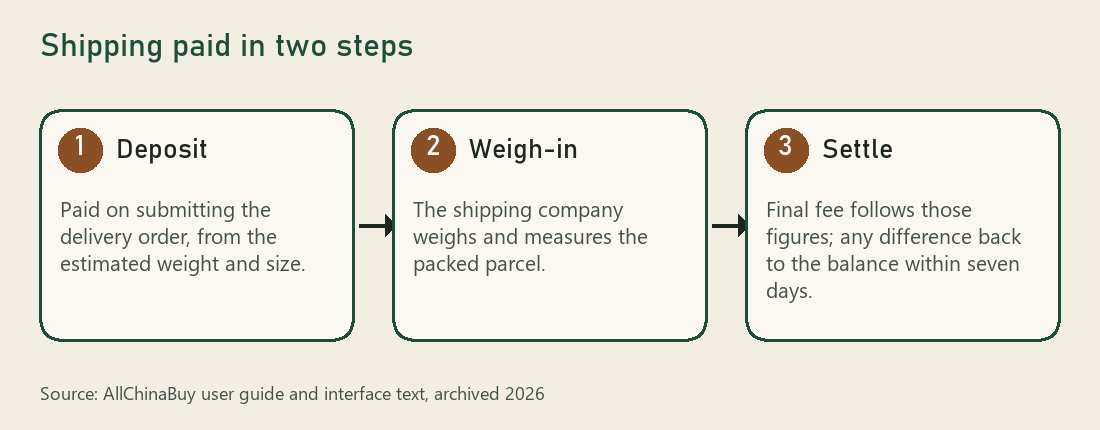

Two practical points followed. The deposit was an estimate, so the figure on screen when you submitted was not the final bill. And the refund of any overpayment came back as account balance rather than to your card, which is worth knowing at any agent that works this way if you do not plan another order soon.
The Shipping Expert option and what it offered
For buyers who did not want to choose a shipping line themselves, AllChinaBuy offered a paid service called Shipping Expert. The form asked three things: whether you would accept the haul being split into separate parcels, whether to keep the packaging or remove it, and whether you wanted the lowest freight, the fastest delivery or an overall balance. Warehouse specialists then handled the parcels within one to three working days of the request.
The reminders under the form set out the terms. The service fee did not include packaging and handling fees, and it was not refunded once the service had been requested. Compensation for damage fell under the general after-sales policy.
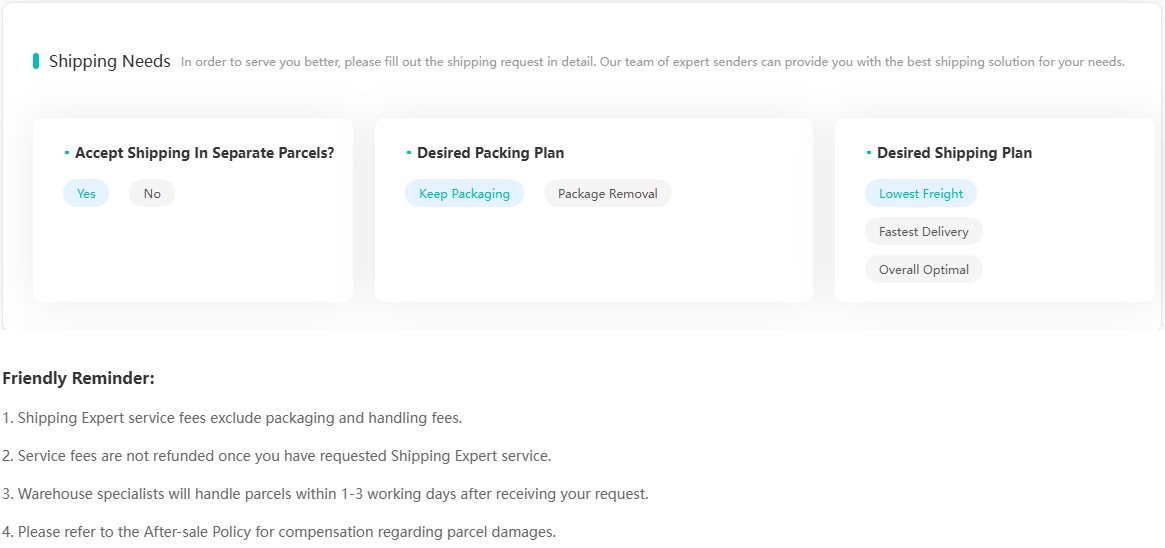
For a bag haul the packing question was the useful one. "Package Removal" could shrink a parcel full of boxed wallets and stuffed holdalls; "Keep Packaging" was the choice when a box mattered, for a gift or a possible return.
Heavy freight by sea or rail
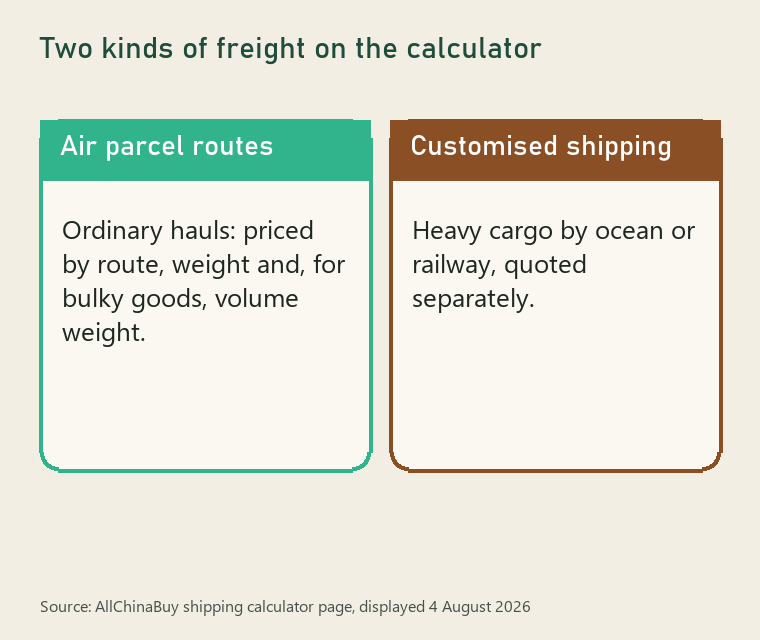
For heavy cargo, the shipping calculator pointed to a separate Customized Shipping Service by ocean or railway. It sat outside the ordinary parcel routes and was meant for loads where the weight made air freight hard to justify.
Most bag hauls never came near it. A handful of rucksacks and totes is light; what grows is the volume, not the weight. Sea and rail freight was there for buyers moving genuinely heavy goods, such as furniture or bulk orders, and it ran on its own quotes and timings.
Items the warehouse would not send, or would mix in only in small amounts
The shipping calculator's FAQ listed cigarettes, alcohol, medicine and prohibited items as goods that could not be shipped overseas. Food, liquids, powders and creams needed non-hazardous certification under air transport rules, so the FAQ advised against shipping them in quantity.
Small amounts were handled differently. Bottled cosmetics could travel mixed in with everyday goods like clothing and footwear if each bottle held 100 ml or less and the parcel held no more than 200 ml in all. Another help article suggested that small quantities of liquids and medicines should make up no more than a tenth of a parcel's goods.
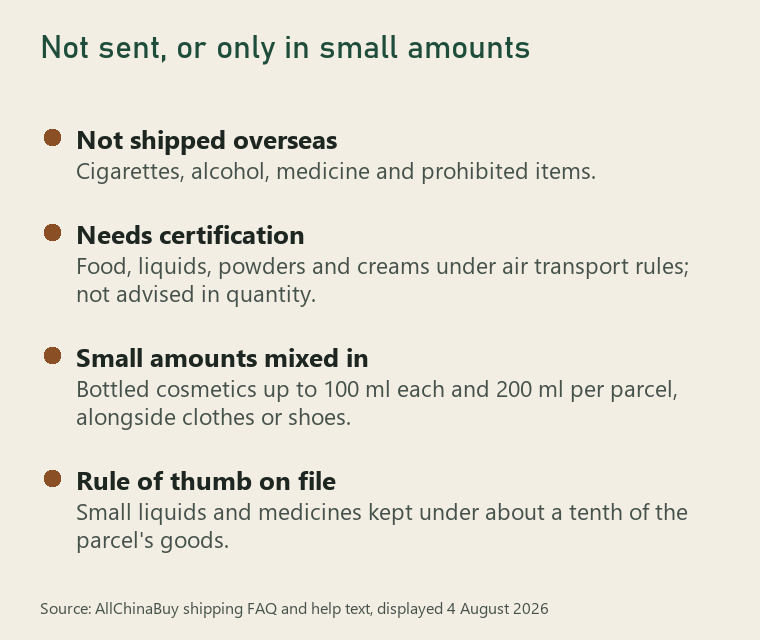
For a bag haul this is mostly about the extras. A bottle of fragrance, or a speaker with a built-in battery, tucked into a rucksack is the kind of item that commonly changes which routes a parcel may use.
Clearance time and an honest declaration
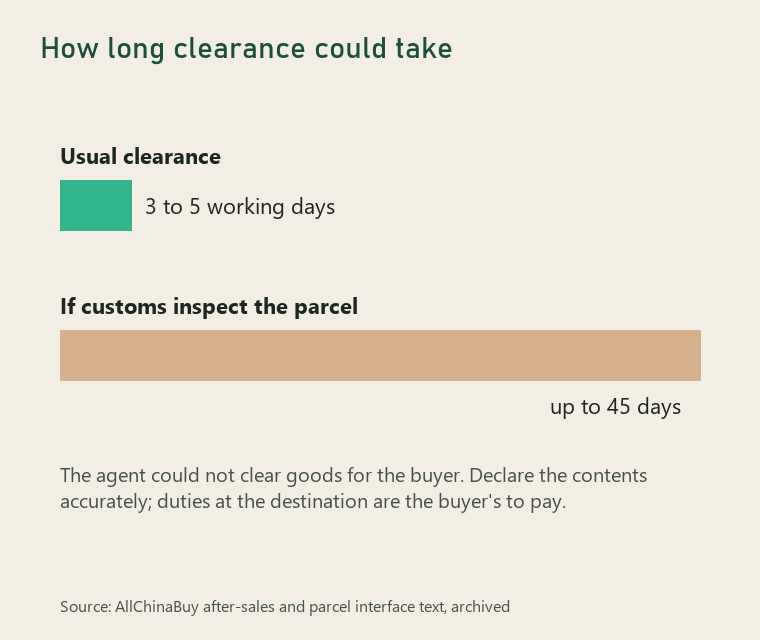
Once a parcel left China, customs in the destination country took over. AllChinaBuy's after-sales text put ordinary clearance at three to five working days and said an inspection could take up to 45 days. It also made clear that it could not clear goods on a buyer's behalf.
Its parcel form suggested declaring parcels accurately. That is the only advice this site repeats on the subject: describe what is in the box as it really is, and expect any duties or charges at the destination to be yours to pay.
Choose the packing around the bag, not just the scale
A soft canvas tote, a structured leather bag and a hard suitcase need different decisions. Removing every box may reduce volume, but a crushed shape or scratched clasp is not a successful saving. Use the listing and warehouse photos to identify what actually needs support.
| Item | Before choosing packaging | Ask about |
|---|---|---|
| Soft tote or fabric pouch | Whether it can fold without damaging a print or trim | Protection from sharp hardware elsewhere in the parcel |
| Structured bag | Which panels and handle attachments must keep their shape | Internal support, dust cover and protection around metal parts |
| Wallet with a presentation box | Whether you need the box or only the wallet | The size and weight difference before removal |
| Hard case or large holdall | Its longest side and the packed dimensions | Route limits and chargeable weight after the chosen packing |
Read a shipping estimate as a proposal
Check destination, route, weight basis, packing services and what the quote says about later adjustment. If two routes show different prices, compare the restrictions and compensation terms before comparing the headline amount. The historical volume-weight formula earlier on this page is a record of one service’s published rule, not a universal calculator for today’s routes.
After payment, save the parcel number and the final charge record. A label being created is different from a carrier accepting the parcel. If tracking remains at a pre-advice stage, ask whether collection has occurred and which party currently holds the parcel.