
Haul Tray / Choosing shops and agents
Bag, shop and agent, each picked before the tray fills
Five short guides for the decisions that come before an order: which shop, which of several look-alike listings, which spreadsheet site to rely on, which agent, and which mistakes to avoid. They draw on ordinary buying experience; where AllChinaBuy's own rules come in, the date is given.
Weighing up a bag shop before ordering
Bags are sold in China through every kind of shop, from a maker's own store to a reseller with a thousand listings gathered from elsewhere. You cannot usually meet the people behind it, so judging a seller comes down to what the shop page shows. Good sellers tend to have photos of their own, shot in the same room and the same light across many listings, with option menus that match those photos. A shop whose every photo comes from a different studio is often reselling someone else's stock.
Look at how long the shop has been open and how many sales a listing claims, but do not lean on either alone. Reviews often sit behind a login when you browse from outside China. What you can always do is send a question before ordering, through your agent if need be, and see how clearly the shop answers.
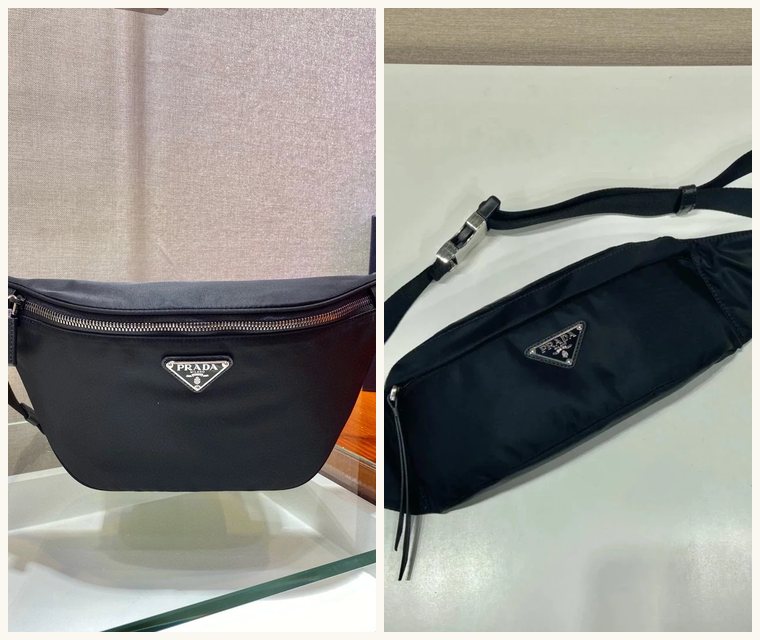
This site does not name shops or score them. Each card opens the product page in the catalogue, where the listing details can be read in full.
Picking one bag listing out of near-identical ones
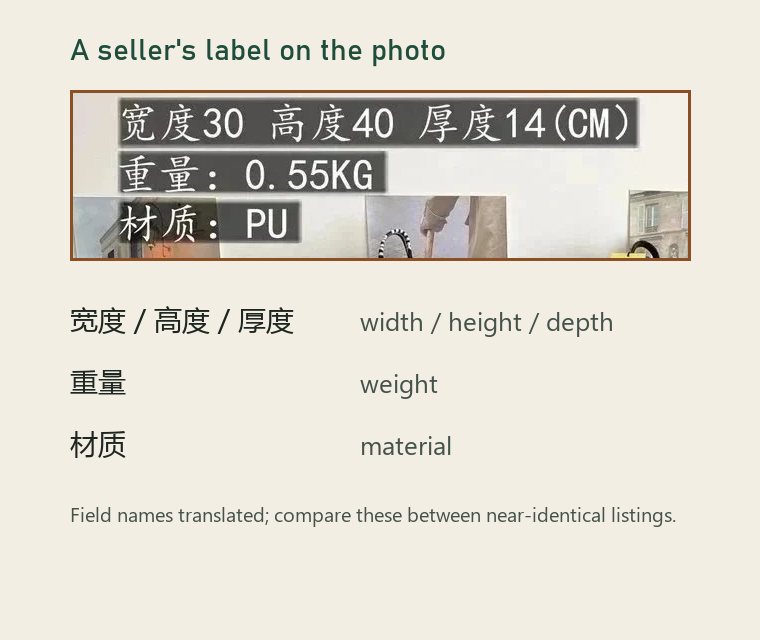
It is common to find the same bag, or what looks like it, on five listings at five prices. Judging a listing before it goes into the tray comes down to three comparisons. First the photos: are they the shop's own, and do they show the inside, the base and the hardware? Second, the details the seller writes on the photo or in the description, such as measurements and materials; one rucksack listing on this site prints its size label in the corner of the image, which is exactly the kind of detail to compare. Third, the option menu: which colours, which sizes, and what the price covers.
The cheapest of five listings is not always the worst and the dearest is not always the best. The listing that answers the most questions with its own photos is usually the one to try first.
Signs that somebody still tends a catalogue site
Spreadsheet sites like this one are catalogues of products from Chinese shops, and there are a great many of them. Choosing a spreadsheet site to rely on is mostly a matter of checking whether anyone still looks after it. A cared-for one tells you when each price was read, so you can judge how stale it is. Its links open, and broken ones are taken out rather than left to pile up. Its descriptions are its own words, not a pasted seller title. And it names the people behind it and explains where its money comes from.
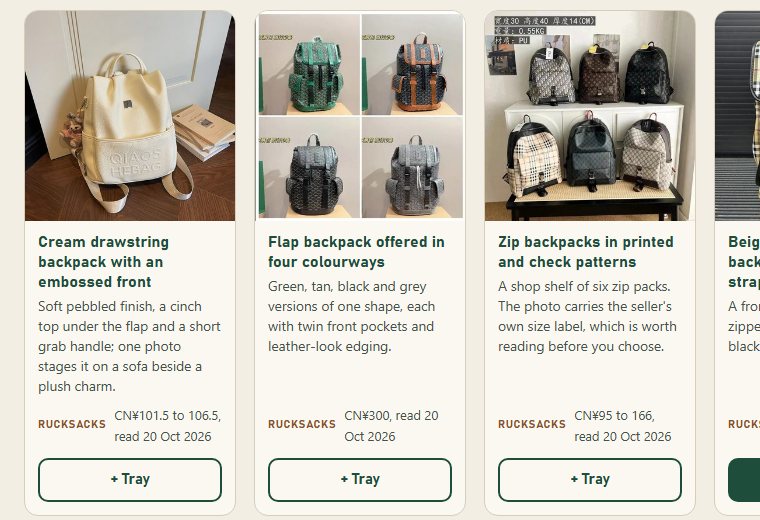
Hold this site to the same standard. Every card carries the date its price was read, the notes are written from the photos, the revisions page lists what changed and when, and the about page explains the referral links.
An agent suited to a bag-heavy parcel
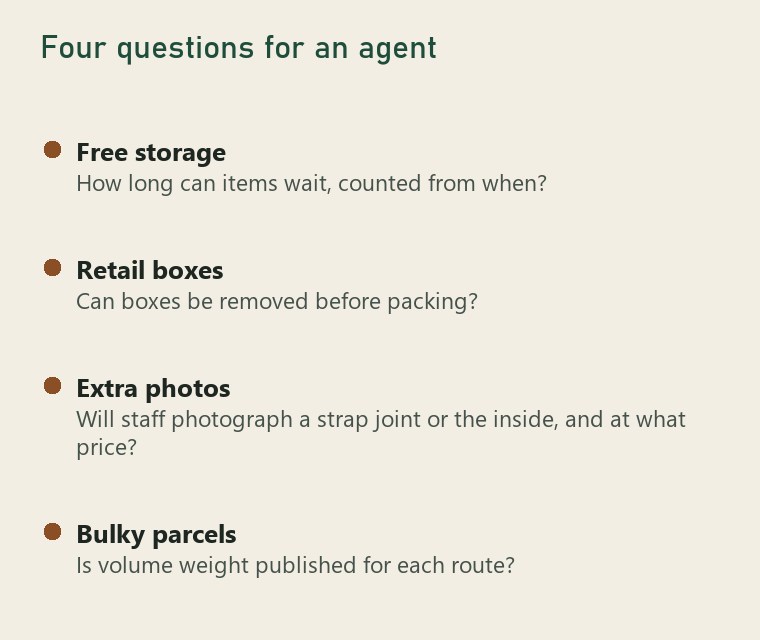
Choosing an agent for bags means weighing what a bag haul actually asks of one, rather than headline fees alone. How long will it store goods free, given that bag shops dispatch at different speeds? What does it do with retail boxes, and can you ask for them to be removed? Will it photograph a strap joint or the inside of a bag on request, and at what price? Does it publish how it charges for bulky but light parcels?
Agents answer these in their help pages, which change, so read them on the day you decide. The four agents on our AllChinaBuy record page are compared on three warehouse points, with dates.
Slip-ups that slow a bag haul down
A handful of mistakes turn up again and again with bag hauls. Ordering by the colour name in a menu instead of the photo, and receiving the wrong shade. Assuming the pouch or strap in the picture is included. Adding a boxed item to a full parcel and finding the box doubles its size. Letting the first item sit past its free period while waiting for the last. Sending a big holdall without checking its longest side against the agent's packing limits.
Each one is cheap to prevent: a note beside every link, a question to the shop, a decision about boxes before ordering, and a date written down when each item arrives. The tray helps with the first and the last; the rest is reading.
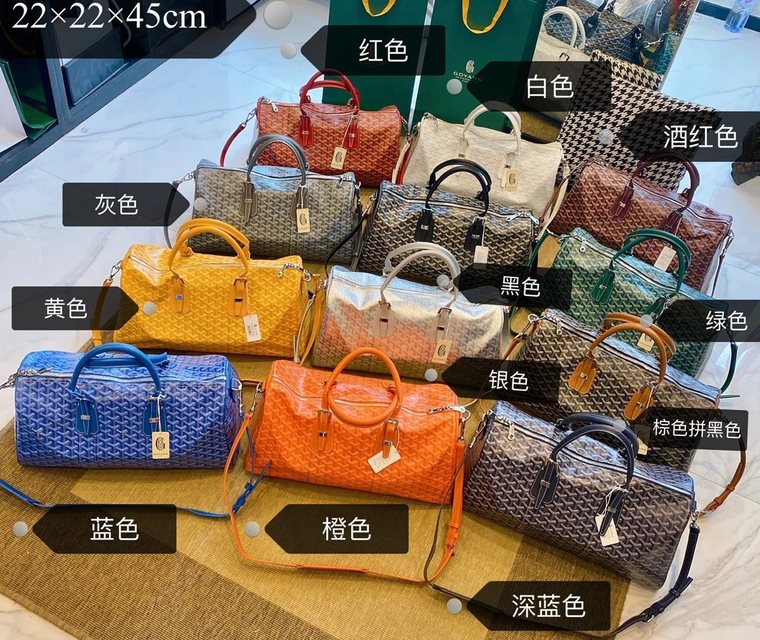
The check holdalls on the weekend rail make a good test: their colours are named in Chinese on the photo, and that photo is the reference to use when you pass the link on.